Why So Many Sellers Are Cutting Their Price Right NowPrice cuts are turning up everywhere right now, and they read very differently depending on which side of the deal you’re on.Sellers tend

Dated: February 26 2024
Views: 17

If you’re planning to buy your first home, saving up for all the costs involved can feel daunting, especially when it comes to the down payment. That might be because you’ve heard you need to save 20% of the home’s price to put down. Well, that isn’t necessarily the case.
Unless specified by your loan type or lender, it’s typically not required to put 20% down. That means you could be closer to your homebuying dream than you realize.
As The Mortgage Reports says:
“Although putting down 20% to avoid mortgage insurance is wise if affordable, it’s a myth that this is always necessary. In fact, most people opt for a much lower down payment.”
According to the National Association of Realtors (NAR), the median down payment hasn’t been over 20% since 2005. In fact, for all homebuyers today it’s only 15%. And it’s even lower for first-time homebuyers at just 8% (see graph below):
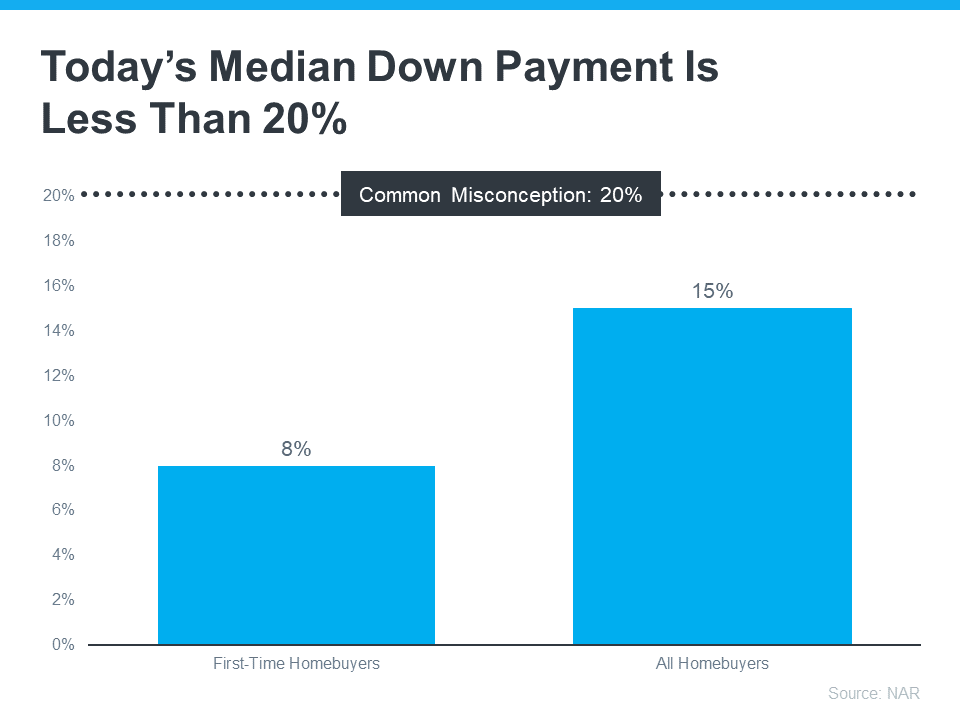
The big takeaway? You may not need to save as much as you originally thought.
According to Down Payment Resource, there are also over 2,000 homebuyer assistance programs in the U.S., and many of them are intended to help with down payments.
Plus, there are loan options that can help too. For example, FHA loans offer down payments as low as 3.5%, while VA and USDA loans have no down payment requirements for qualified applicants.
With so many resources available to help with your down payment, the best way to find what you qualify for is by consulting with your loan officer or broker. They know about local grants and loan programs that may help you out.
Don’t let the misconception that you have to have 20% saved up hold you back. If you’re ready to become a homeowner, lean on the professionals to find resources that can help you make your dreams a reality. If you put your plans on hold until you’ve saved up 20%, it may actually cost you in the long run. According to U.S. Bank:
“. . . there are plenty of reasons why it might not be possible. For some, waiting to save up 20% for a down payment may “cost” too much time. While you’re saving for your down payment and paying rent, the price of your future home may go up.”
Home prices are expected to keep appreciating over the next 5 years – meaning your future home will likely go up in price the longer you wait. If you’re able to use these resources to buy now, that future price growth will help you build equity, rather than cost you more.
Keep in mind that you don't always need a 20% down payment to buy a home. If you're looking to make a move this year, let’s connect to start the conversation about your homebuying goals.

Your Visalia & Tulare County Real Estate ExpertI’m Paul Deathriage, a trusted real estate professional serving Visalia, Tulare County, and the surrounding Central Valley communities. With ye....
Why So Many Sellers Are Cutting Their Price Right NowPrice cuts are turning up everywhere right now, and they read very differently depending on which side of the deal you’re on.Sellers tend
There Are 4 Types of Housing Markets Right Now. Which 1 Are You In?Today’s housing market splits into four distinct types. You’ve got cash buyers, buyers financing a purchase, owners who
3 Things You Can Actually Control About Your Mortgage Rate Right NowIf you're trying to buy a home, affordability is probably what keeps you up at night. And as you watch mortgage rates tick up
Selling This Fall? You Want To Get These 4 Things Right.Selling your house this fall is absolutely doable. But there’s something you need to know about this time of year. Buyer activity
 © 2026 Fresno Association of REALTORS ®. All rights reserved. The data relating to real estate for sale on this web site comes in part from the Internet Data eXchange (IDX) of the Multiple Listing Service. Real estate listings held by brokerage firms other than Anderson Real Estate Group are marked with the IDX logo and detailed information about them includes the name of the listing broker and the name of the listing agent.
All data, including all measurements and calculations of area,
is obtained from various sources and has not been, and will not be, verified by broker or MLS. All information should be independently reviewed and verified for accuracy. Properties may or may not be listed by the office/agent presenting the information.
Show More...
© 2026 Fresno Association of REALTORS ®. All rights reserved. The data relating to real estate for sale on this web site comes in part from the Internet Data eXchange (IDX) of the Multiple Listing Service. Real estate listings held by brokerage firms other than Anderson Real Estate Group are marked with the IDX logo and detailed information about them includes the name of the listing broker and the name of the listing agent.
All data, including all measurements and calculations of area,
is obtained from various sources and has not been, and will not be, verified by broker or MLS. All information should be independently reviewed and verified for accuracy. Properties may or may not be listed by the office/agent presenting the information.
Show More...
 Tulare County Association of REALTORS® All information deemed reliable but not guaranteed. All properties are subject to prior sale, change or withdrawal. Neither listing broker(s) or information provider(s) shall be responsible for any typographical errors, misinformation, misprints and shall be held totally harmless. Listing(s) information is provided for consumer's personal, non-commercial use and may not be used for any purpose other than to identify prospective properties consumers may be
interested in purchasing. The data relating to real estate for sale on this website comes in part from the Internet Data Exchange program of the Multiple Listing Service. Real estate listings held by brokerage firms other than Anderson Real Estate Group may be marked with the Internet Data Exchange logo and detailed information about those properties will include the name of the listing broker(s) when required by the MLS. Copyright ©2026 All rights reserved.
Last Updated: September 26, 2026 1:17 PM UTC
Show More...
Tulare County Association of REALTORS® All information deemed reliable but not guaranteed. All properties are subject to prior sale, change or withdrawal. Neither listing broker(s) or information provider(s) shall be responsible for any typographical errors, misinformation, misprints and shall be held totally harmless. Listing(s) information is provided for consumer's personal, non-commercial use and may not be used for any purpose other than to identify prospective properties consumers may be
interested in purchasing. The data relating to real estate for sale on this website comes in part from the Internet Data Exchange program of the Multiple Listing Service. Real estate listings held by brokerage firms other than Anderson Real Estate Group may be marked with the Internet Data Exchange logo and detailed information about those properties will include the name of the listing broker(s) when required by the MLS. Copyright ©2026 All rights reserved.
Last Updated: September 26, 2026 1:17 PM UTC
Show More...
